Generator Installers
in Lee’s Summit, MO

Serving Greater Kansas City since 1991
Our Generator Services in Lee's Summit, MO
Lee’s Summit Heating & Cooling installs, replaces, and repairs residential generator systems. Our generator installers plan the electrical connection, coordinate the required fuel and site considerations, and test the completed system under load so you know what it will power during an outage.
Generator Installation
We install standby generators for essential-circuit and whole-home backup, starting with the full load calculation to determine proper capacity, followed by equipment selection, placement planning, transfer switch installation, electrical panel integration, and final startup testing. Each installation is designed for your real-world electrical demand.
Generator Replacement
We recommend generator replacement when a unit becomes unreliable, requires frequent repairs, lacks parts availability, or no longer meets the home’s electrical demand. Before replacing equipment, we evaluate the entire system and only reuse components that remain compatible and compliant with current installation standards.
Generator Repair
Schedule generator repair if the unit fails to start, misses its exercise cycle, triggers a controller alarm, leaks fluid, produces unstable power, or doesn’t transfer the home during an outage. We diagnose the generator and transfer equipment as a complete system and verify after repair that it starts properly.
Generac Generator Installation & Repair in Lee's Summit
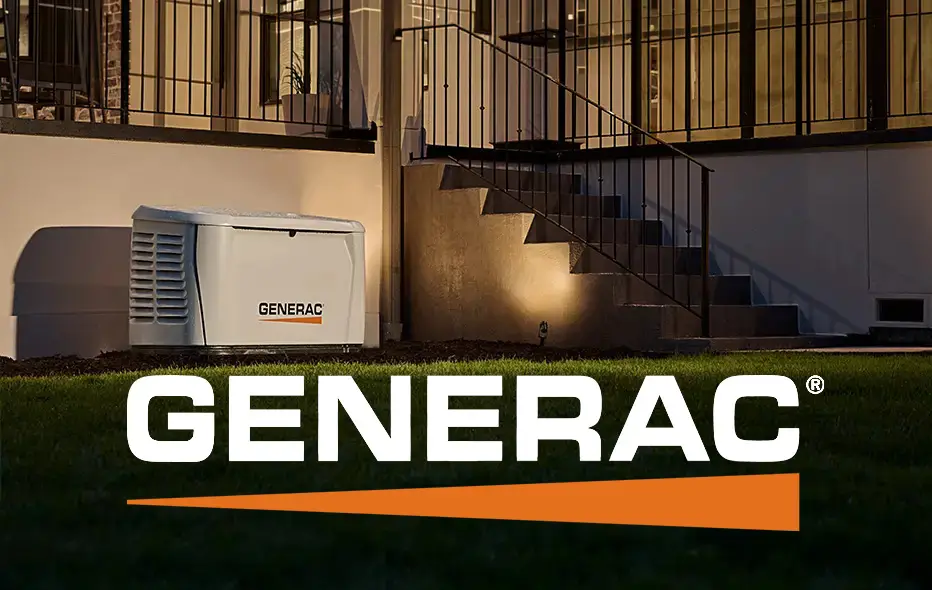
Lee’s Summit Heating & Cooling installs and services Generac home standby generators. Generac’s Guardian® Series includes a 10 kW model designed for essential-circuit protection and configurations up to 26 kW with whole-house transfer equipment. The appropriate model depends on the home’s calculated electrical load, available fuel supply, and the appliances that have to remain operational.
Our Generac services cover system sizing, generator placement, transfer-switch installation, electrical integration, startup testing, maintenance, and repair. We troubleshoot starting failures, weak batteries, controller alarms, exercise-cycle problems, fuel issues, and generators that run but fail to transfer power to the home.
Types of Backup Generators We Install
Backup-power products differ substantially in capacity, fuel source, operating method, and electrical connection. A standby generator is permanently installed and starts automatically. Portable, inverter, and solar-backed products typically require manual setup, but an electrician can install compatible inlet and transfer equipment to connect certain systems safely to selected household circuits.
Home Standard Generators
A home standby generator is permanently installed outside the home and tied to a natural gas or propane supply so it can start automatically during an outage. An automatic transfer switch detects the power loss, disconnects the home from the utility, and safely powers preselected circuits without any manual action. The systems can be sized for essential loads like refrigeration, lighting, heating, sump pumps, and key outlets, or expanded for broader whole-home coverage depending on capacity.
Inverter Generators
An inverter generator is a portable unit that adjusts engine speed to match demand and produce stable, clean power suitable for sensitive electronics. These units are commonly chosen for fuel efficiency, quieter operation, and limited backup needs rather than full-home automatic coverage. They are often used alongside transfer equipment to power selected circuits.
Portable Generators
Portable generators provide manually operated backup power for selected appliances, tools, or designated circuits during an outage. When paired with a listed power inlet and compatible transfer switch or interlock, an electrician can connect them safely to the home’s electrical system and prevent backfeeding the utility grid. They require careful operation and must never be plugged directly into a household outlet.
Solar Generators
A solar generator is a portable battery power station that can be recharged with optional solar panels instead of fuel. Performance during an outage depends on inverter output, battery capacity (kWh), connected load, and available sunlight for recharging. Smaller units can power essentials for a limited time. Larger battery-and-inverter systems can support selected household circuits.
What Kind Of Generator Do I Need For My Home?
Start by identifying the equipment that has to keep running during an outage. Refrigerators, freezers, furnaces, sump pumps, medical equipment, well pumps, and air conditioners can have very different running and starting demands. Fuel availability, desired runtime, automatic operation, noise, storage, and project budget also affect the right choice. Homes of similar size can have different electrical demands based on HVAC systems, appliances, pumps, and fuel sources. Generator capacity should be determined using a calculated electrical load.
Generator
Avg. Power Output
Typical Load Coverage
Whole-Home
10 to 26 kW
10-14+ circuits
Inverter
2 to 5 kW
3-8 essential circuits
Portable
3 to 12 kW
4-12 circuits
Solar
1 to 2 kW
1-6 circuits in limited durations